Cyrex Lymphocyte MAP Testing
Comprehensive Lymphocyte Immunophenotyping
What This Test Helps With
The Lymphocyte Map™ provides a deeper analysis of your immune system to identify hidden imbalances not seen in standard tests.
Often recommended for:
Chronic fatigue or unexplained symptoms
Autoimmune conditions
Recurrent infections or inflammation
Why It Matters
If your labs are “normal” but you still feel unwell, this test helps uncover underlying immune dysfunction — allowing for more targeted, personalized care.
Is It Right for You?
Ideal for patients seeking a deeper, root-cause understanding of persistent or complex health concerns.
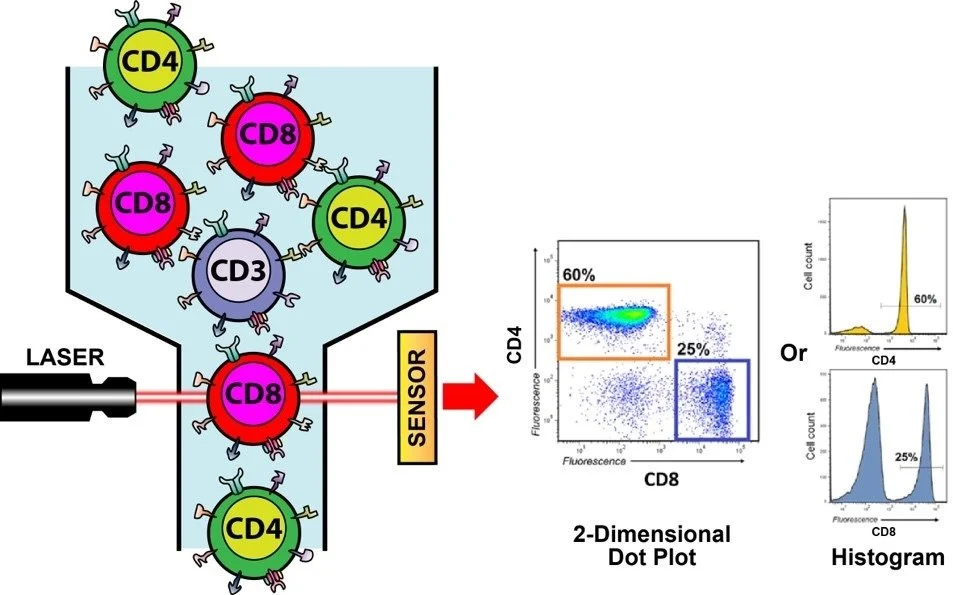
The Lymphocyte MAP™, is an innovative test which establishes a new standard in screening the immune system. It measures the integrity of the immune system at the cellular level to help identify a patient’s immune status and immunotype(s), based on 35 key determinations.
It utilizes an advanced proprietary flow cytometry method, which combines cutting-edge laser technology with monoclonal antibodies, to precisely measure the properties of living cells such as size, shape, density and granularity which results in a precise count of various lymphocyte subpopulations.
This helps identify patterns of imbalance of T cells, B cells and Natural Killer cells. It then organizes these patterns into specific immunotypes to provide an invaluable picture of the immune system.
Cbc vs Basic Immunophenotyping vs the Lymphocyte Map
This breakthrough panel establishes a new industry standard in screening the immune system.
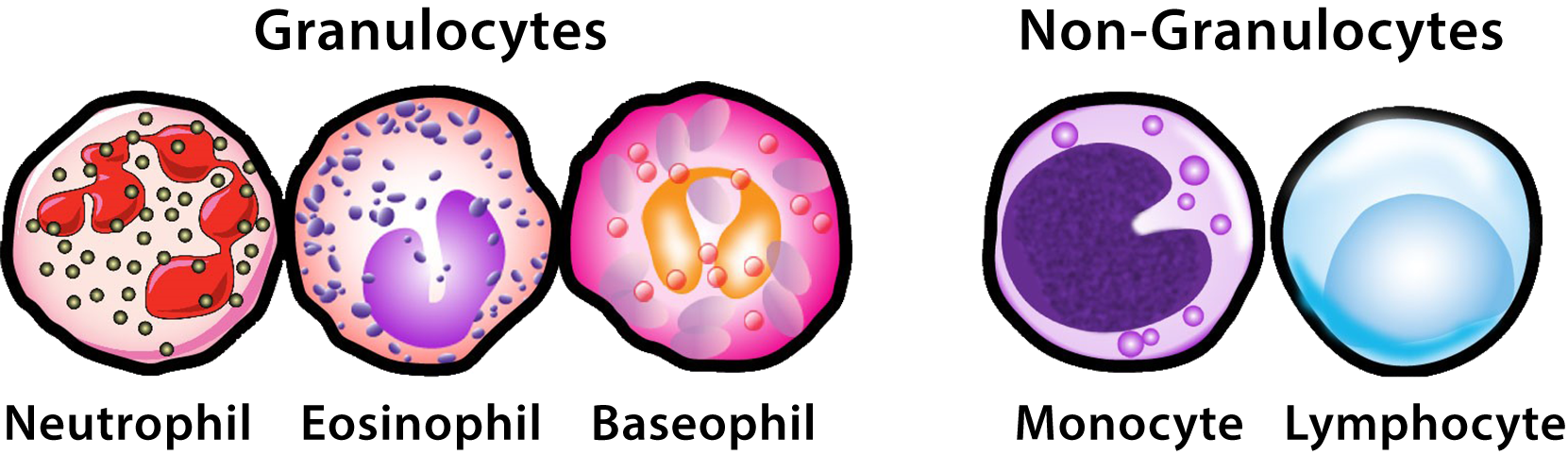
Complete Blood Cell Count (CBC)
Part of a regular check up
Basic Lymphocyte Immunophenotyping
Performed by some labs for the purpose of detecting certain immune deficiencies including AIDS
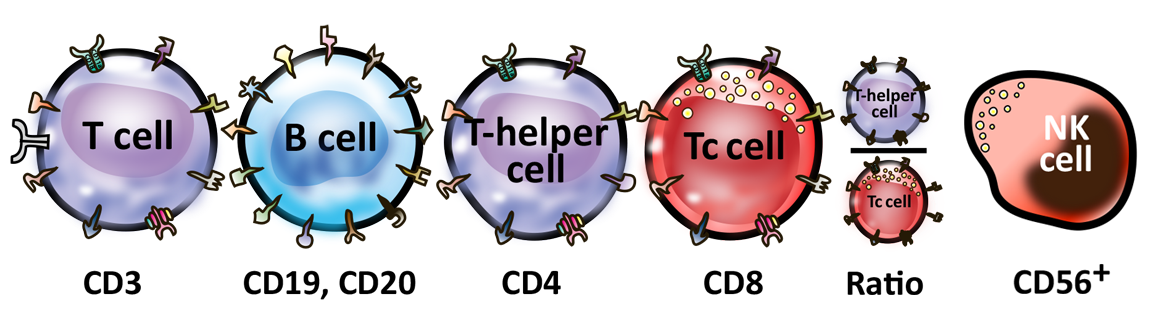
The Lymphocyte MAP™
Exclusive immunophenotyping to help identify immune deficiency, immune over-activity, infections, inflammation, autoimmunities, allergies, asthma, hypersensitivities, and cancers
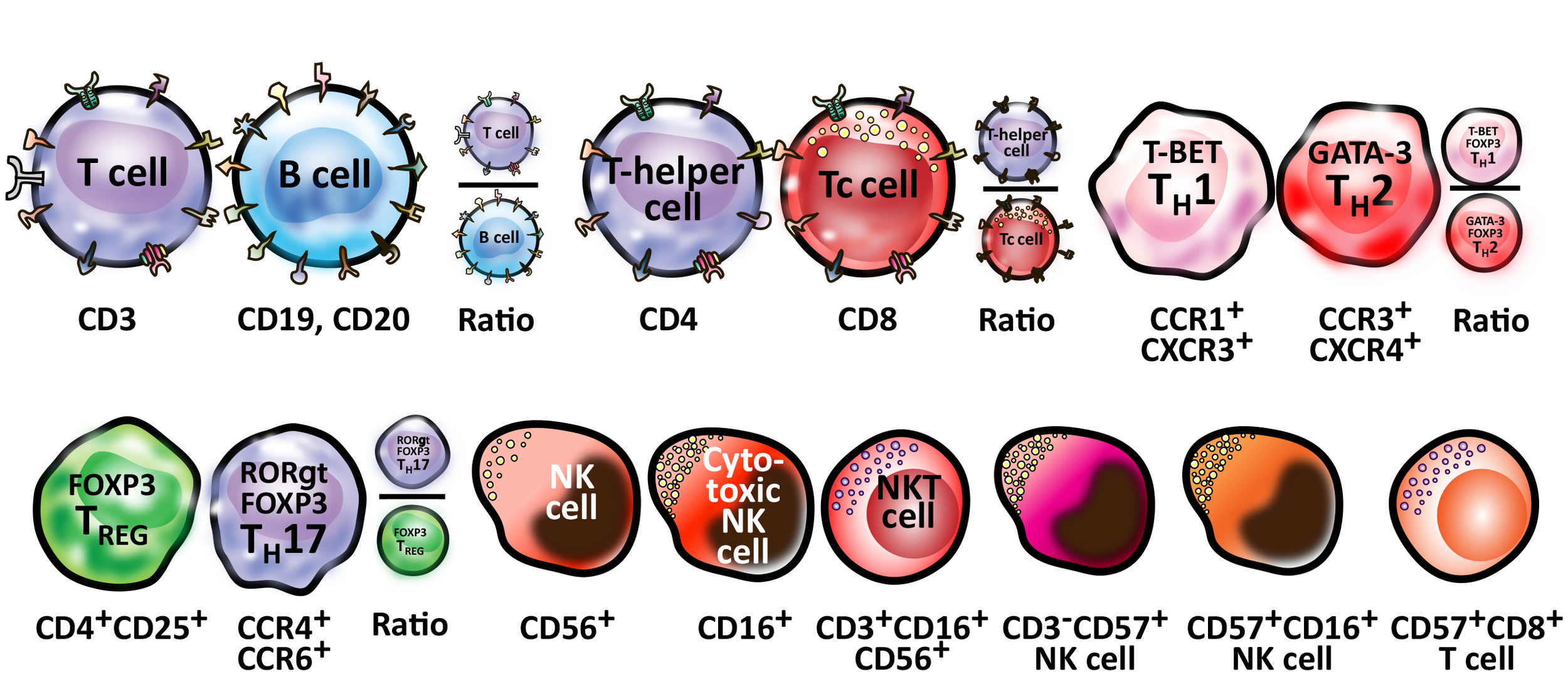
The Lymphocyte Map™ – Numbers, Ratios, Percentages and Activity – Nrpa
Lymphocytes and their subpopulations are the key elements of the immune system. In adults, they account for about 20-49% of the total number of white blood cells. It would be vitally important to measure decrease or increase in the percentage and number of these important lymphocytes. It is the numbers, ratios, percentages and activity level of these lymphocytes, and their subpopulations which are responsible for protection against various environmental factors, including viruses.
When healthy, these NRPAs are in a precise and pre-determined relationship to one-another. It is the disruption of these finely balanced relationships which can compromise the immune function.
These are NOT measured by a CBC test, which is just part of a yearly checkup. There is a significant difference between lymphocyte immunophenotyping and the complete blood count (CBC), which is used for checking the overall health of a patient.
A CBC could be absolutely normal, but the patient could actually be suffering from immune dysfunction, which includes immune deficiencies, hidden inflammation, autoimmunities, hypersensitivities and allergies induced by environmental triggers. These immune disorders can be detected by the advanced immunophenotyping of lymphocytes done by Cyrex Labs.
Key Features of the Lymphocyte Map
Fourteen immunotypes uniquely designed to capture and highlight important immune trends revealed due to the comprehensive number of determinations tested.
T-helper-1 or T-helper -2 Dominance (Immunotypes 6 and 7) Includes the Cyrex Fluorescence Activated Cell Test (Cyrex FACT™), a breakthrough proprietary process developed by expert Cyrex immunologists, to classify Th1/Th2 balance or imbalance, based on the specific clusters of differentiation (CD markers) on the surface membranes on Th1 or Th2 cells, and not on the measurement of Th1/Th2-associated cytokine levels in the blood, commonly used by other laboratories.
Regulatory T cells or Tregs (Immunotype 8) maintain the balance between Th1 and Th2. A low number of Tregs may result in the breakdown in peripheral, central and oral tolerance, immune suppression, immune deficiencies, some autoimmune disorders, increased infections and cancer.
T-helper-17 dominance. (Immunotype 9) Includes the Cyrex FACT™ process based on direct measurement of cells based on the CD markers on their surface membranes of the cells, not by measuring IL-17 levels in the blood.
Patterns of disturbance in NK, cytotoxic NK and NK T cells. (Immunotypes 12 and 13) these immmunotypes are characterized by imbalanced natural killer (NK) cells, cytotoxic NK cells and NK T cells. They are the body’s soldiers whose job is to destroy different pathogens and varieties of cancer cells.
Immunotype with low or high CD57+ and its combination with CD16+ NK cells and CD8+ T cells. (Immunotype 14) CD57+ NK cells are highly differentiated long-lived cells that are more efficient in the killing of pathogen-infected cells and cancers, particularly during aging. Due to their efficiency at the killing of their targets, elevations in the number of CD57+ NK cells are associated with better outcomes for patients with cancers and some autoimmune diseases, while low levels are associated with lower overall survival from cancer.
Clinical Uses
The Lymphocyte MAP can:
Provide you with very useful surrogate markers for the diagnosis of autoimmune diseases, immune deficiencies, allergies and hypersensitivities.
Give you an invaluable picture of underlying immune imbalances that may trigger complex diseases.
Help you see how environmental triggers could affect your immune system, possibly resulting in a disease.
Help you identify immune conditions at an earlier stage, which if not addressed, may cause over-reaction (autoimmunity), or under-reaction (immune deficiencies) of the immune system, thus gauge existing susceptibilities.
Give you a more precise immune picture to help plan a treatment regimen or monitor its success.
The Lymphocyte MAP opens a new world for the immune system analysis and identifies important correlations with disease conditions.
Lymphocyte Map™ Determinations:
Total WBC
Total Lymphocyte
% Lymphocyte
Total T Cell
% T Cell
Total B Cell
% B Cell
T Cell/B Cell Ratio
Total T-Helper (CD4) Cell
% T-Helper (CD4) Cell
Total Cytotoxic (CD8) T Cell
% Cytotoxic (CD8) T Cell
CD4/CD8 Ratio
Total T-Helper-1 Cell
% T-Helper-1 Cell
Total T-Helper-2 Cell
% T-Helper-2 Cell
TH1/TH2 Ratio
Total T-Helper-17 (Th17)
% T-Helper-17
Total Regulatory T Cell (Treg)
% Regulatory T Cell
Th17/Treg Ratio
Total NK Cell (CD56+)
% NK Cell (CD56+)
Total Cytotoxic NK cells (CD16+)
% Cytotoxic NK cells (CD16+)
Total NKT (CD56+ CD16+ T Cell)
% NKT (CD56+ CD16+ T Cell)
Total CD3- CD57+ Lymphocyte
% CD3- CD57+ Lymphocyte
Total CD57+ CD8+ T Cell
% CD57+ CD8+ T Cell
Total CD57+ CD16 NK Cell
% CD57+ CD16 NK Cell
Cyrex Lymphocyte Immunophenotyping
Cyrex Immunotype classifications are based solely on, and refer solely to, absolute lymphocyte counts and their subsets. Immunotypes are identifiable patterns that show the immune system is responding to circumstances or environmental factors. While cell counts and immunotypes may provide valuable insights, they are not indicative of any specific condition or disease and should not be used alone to interpret the results. The Lymphocyte MAP™ provides two important categories of information: (1) each parameter/determinant provides important information on its own, and (2) the relationship between parameters provides another set of invaluable information categorized in multiple immunotypes (immunophenotype patterns).
Immunotype 1. Immune balance or harmony at the time of testing, due to one of the following: Total Cell Counts are all within the reference range; some determinants (percentages or ratios) may be out-of-range.
Immunotype 2. T cell Dominance at the time of testing, due to one of the following: high T cell with normal or low B cell, or normal T cell with low B cell results.
Immunotype 3. B cell Dominance at the time of testing, due to one of the following: high B cell with normal or low T cell, or normal B cell with low T cell results.
Immunotype 4. Immune Hyperactivity/CD4 Dominance at the time of testing, due to one of the following: high CD4 with normal or low CD8, or normal CD4 with low CD8 results.
Immunotype 5. Immune Deficiency/CD8 Dominance at the time of testing, due to one of the following: high CD8 with normal or low CD4, or normal CD8 with low CD4 results.
Immunotype 6. Th1 Dominance at the time of testing, due to one of the following: high Th1 with normal or low Th2, or normal Th1 with low Th2 results.
Immunotype 7. Th2 Dominance at the time of testing, due to one of the following: high Th2 with normal or low Th1, or normal Th2 with low Th1 results.
Immunotype 8. Regulatory T cell Imbalance at the time of testing, due to one of the following: high or low regulatory T cell results.
Immunotype 9. Th17 Dominance at the time of testing, due to one of the following: high Th17 with normal or low Treg, or normal Th17 with low Treg results.
Immunotype 10. Th1+Th17 Dominance at the time of testing, due to one of the following: high Th1+Th17 with normal or low Treg.
Immunotype 11. Th2+Th17 Dominance at the time of testing, due to one of the following: high Th2+Th17 with normal or low Treg.
Immunotype 12. NK Cell Imbalance at the time of testing, due to one of the following: high or low NK or Cytotoxic NK cell results.
Immunotype 13. NKT Cell Imbalance at the time of testing, due to one of the following: high or low NKT cell results.
Immunotype 14. CD57+ Cell Imbalance at the time of testing, due to one of the following: high or low CD57+, CD57+CD16+, and CD57+CD8+ cell results.
Low numbers of lymphocytes and their subsets may result in one or more absolute counts being out of range, while other absolute counts might even be over the high limits of the given range, but in certain cases the results would not fit within the Cyrex-defined criteria for Immunotypes 1-14. Under such circumstances the results would be labeled as No Immunotypes Apply at time of testing.
The following are examples of certain immunotypes:

T-helper-1 or T-helper-2 Dominance (Immunotypes 6 and 7)
The new proprietary Cyrex Fluorescence Activated Cell Test (FACT™) offers a more accurate picture of T-helper cell status.
Th1 dominance may result in inflammation and autoimmunity, while Th2 dominance may result in asthma, allergies, and hyper-sensitivities to environmental factors.

T or B Cell Dominance (Immunotypes 2 and 3)
These are immunotypes with abnormal patterns of too few or too many T and B cells, or with abnormal T & B cell ratio, which are associated with immune dysregulation, immunodeficiencies, viral infections or bacterial infections. Low T cell counts may indicate problems with bone marrow, lymph nodes and lymphoid organs, and have been observed in patients with viral infections such as HIV and COVID-19. T-cell dominance or too many T cells can result in disorders such as allergies, hypersensitivities and autoimmunity. A low B cell count means patient’s bone marrow isn’t generating enough B cells, and thus the immune system’s effectiveness in fighting infection is reduced. On the other hand, B-cell dominance or too many B cells means a greater chance of producing autoimmune antibodies, and could even indicate a form of B-cell cancer.

Dominant Helper or Cytotoxic T cells (Immunotypes 8 and 4)
A patient’s immunotype can reflect a robust T-helper cell (CD4) response or a robust cytotoxic cell (CD8) response. CD4 or T-helper cells are integral to the immune system. Too few CD4 cells affects the functionality of the system. CD4 dominance or too many CD4 cells can lead to hyperactivation of the immune system, inflammation and autoimmunity. As part of the adaptive immune system, CD8 cells release missile-like granules to destroy enemy cells. Like the CD4 cells, a decrease in CD8 cells can also affect the defensive efficiency of the immune system. However, CD8 cells are also suppressor cells, and too many of them, or CD8 dominance, can result in immunodeficiency. The most optimal CD4/CD8 ratio is around 2.5, and lower or higher ratios can be indicative of autoimmune disease, immunodeficiencies or even cancer.

Patterns of Treg Imbalance (Immunotype 8)
Regulatory T cells or Tregs are the conductors of the immune system’s orchestra that maintain the balance between Th1 and Th2. A low number of Tregs leads to a breakdown in oral, central and peripheral tolerance, which may result in many autoimmune disorders, allergies, hypersensitivities and inflammatory diseases. Treg dominance or a high number of Tregs may result in suppression of immune response, resulting in immune deficiency, a weakened immune system, increased infections, and even cancer.

T-helper-17 Dominance (Immunotype 9)
We classify the T-helper-17 (Th17) immunotype with Cyrex FACT™ by direct measurement of cells based on the CD markers on their surface membranes, not by measuring IL-17 levels in the blood. Th17 dominance or too many Th17 cells together with too few Tregs participate in many inflammatory conditions, thus contributing to many autoimmune conditions.

Combined T-helper-1 and T-helper-17 Dominance (Immunotype 10)
The most pathogenic immunotype for autoimmunity is a combination type with simultaneous elevations in Th1 cells and Th17 cells. When this Th1/Th17 dominance is accompanied by a decrease in Treg cells, this unfortunate trifecta contributes greatly to many diseases that are accompanied by inflammation, such as rheumatoid arthritis, multiple sclerosis, systemic sclerosis, type-1 diabetes, metabolic syndrome, and acute coronary syndrome.
Combined T-helper-2 and T-helper-17 Dominance (Immunotype 11)
The most pathogenic immunotype for allergy and asthma is a combination type with simultaneous elevations or dominance in Th2 and Th17 cells.
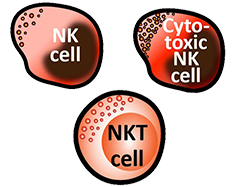
Multiple NK Cells Disturbance Patterns – NK, cytotoxic NK and NK T cells Patterns of Disturbance (Immunotypes 12 and 13)
These immunotypes are characterized by imbalanced natural killer (NK) cells, cytotoxic NK cells and NK T cells. They are the body’s soldiers whose job is to destroy different pathogens and varieties of cancer cells. Low NK cells can lead to viral infection and different types of cancers and autoimmunities.
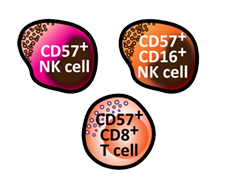
Multiple CD57+, CD16+ NK and CD57+CD8+ T Cells Patterns of Disturbance (Immunotype 14)
This immunotype is characterized by imbalanced CD57+ and CD57+CD16+ NK cells and CD57+CD8+ T cells. These highly cytotoxic NK cells and T cells, due to their capacity for producing high levels of bullet-like materials (perforin, granzymes) are able to protect the body against various pathogens, cancers and autoimmune diseases, particularly during aging.
Multi-Pattern Immunotype
These immunotypes are characterized by a combination of imbalances, dominancies or disturbances of T cells, B cells, CD4, CD8, Th1, Th2, Treg, Th17, NK, cytotoxic NK, NK T cells, CD57+, CD57+CD16+ NK cells, and CD57+CD8+ T cells. These immunotypes can highlight weakness or imbalance in the immune fitness of patients and will enable practitioners to design immunotype-specific immune rejuvenation plans to prevent or halt the progression of the many immune disorders that affect 1 out of 3 Americans.